
Buying a vehicle for your family means thinking beyond cargo space and fuel economy. For most parents, the real question comes down to protection: what happens to the people inside if something goes wrong? Car safety ratings exist to answer exactly that, translating crash lab results into numbers and grades that guide real purchasing decisions. If you're ready to explore vehicles built with that kind of protection in mind, browse our new inventory to see what's currently available on our lot. Understanding how those ratings actually get made gives you far more confidence when comparing models.
Why Car Safety Ratings Matter for North Texas Families
North Texas roads are no joke. Between the volume of highway traffic, fast-moving merges on the Dallas North Tollway, and the sheer density of the DFW metro, the risk of being caught in a collision is genuinely real for everyday commuters and school-run parents alike. Safety ratings give Plano families a concrete, standardized way to compare how different models hold up when things go wrong.
There's a financial angle worth noting too. Vehicles with strong safety ratings often qualify for lower insurance premiums, which means choosing a safer car can quietly save you money year after year. For families managing household budgets in Collin County's busy suburban environment, that adds up faster than you'd expect. Treat car safety ratings as a baseline requirement, not a bonus feature.
The Two Organizations Behind Every Safety Rating
Two independent organizations are responsible for nearly every crash test rating you'll see on a window sticker or dealer website. The first is the National Highway Traffic Safety Administration (NHTSA), a federal agency under the U.S. Department of Transportation. The second is the Insurance Institute for Highway Safety (IIHS), an independent nonprofit funded by auto insurers. Both test vehicles, but they use different methods, different grading scales, and focus on slightly different priorities.
Neither organization coordinates with the other on test design, which is actually useful for consumers. A vehicle that performs well under both programs has genuinely earned its reputation by clearing two separate, rigorous sets of criteria.
| Organization | Who Runs It | Rating Scale | Test Types Covered | Key Award/Designation | Where to Find Results |
|---|---|---|---|---|---|
| NHTSA | U.S. federal government (Dept. of Transportation) | 1–5 stars | Frontal crash, side barrier, side pole, rollover resistance | 5-Star Safety Rating | https://www.nhtsa.gov/ratings |
| IIHS | Independent nonprofit (insurance industry-funded) | Good, Acceptable, Marginal, Poor | Small overlap front (driver & passenger), side barrier, moderate overlap front, headlights, crash avoidance, seat belt reminders | Top Safety Pick / Top Safety Pick+ | https://www.iihs.org/ratings |
NHTSA's 5-Star Rating System: The Federal Benchmark
NHTSA's 5-Star system is the government's official benchmark for vehicle safety. In frontal crash tests, NHTSA uses a 35 mph impact with both an average adult male dummy and a smaller female dummy to capture injury risk across different body types. Side barrier tests use a 3,015-pound barrier traveling at 38.5 mph, simulating a T-bone intersection collision. The side pole test runs at 20 mph with a smaller female dummy. Rollover resistance is measured through a Static Stability Factor based on center of gravity, and no physical crash is actually involved in that one. Overall scores reflect injury risks weighted by real-world crash proportions.
Five stars means the vehicle performed at the highest level in that test category. A vehicle that earns five stars across the board has demonstrated strong structural protection and occupant safety in the conditions NHTSA prioritizes.
IIHS Top Safety Pick: The Industry's Independent Standard
IIHS standards have become arguably the most demanding in the country. Rather than assigning stars, IIHS uses a four-tier grading scale: Good, Acceptable, Marginal, and Poor. The small overlap front test sends a vehicle into a barrier mimicking a pole at 40 mph, separately on both the driver and passenger sides. The side barrier test uses a heavier 4,200-pound striking rig. Moderate overlap front testing, headlight performance, crash avoidance systems, and seat belt reminders are also evaluated. Worth noting: IIHS purchases its test vehicles from dealers just like an ordinary consumer would.
Top Safety Pick+ (TSP+) requires Good ratings in the small overlap front (both sides) and side tests, acceptable- or good-rated headlights on all trims, and an acceptable or good rating in the updated vehicle-to-vehicle front crash prevention evaluation. Top Safety Pick requires Good ratings in small overlap front and side tests, plus acceptable- or good-rated headlights on all trims. By the end of the 2025 award season, 84 total models qualified, with 66 earning TSP+ and 18 earning TSP. For 2026 so far, 63 vehicles qualify: 45 TSP+ and 18 TSP.
Crashworthiness vs. Crash Avoidance: A Critical Distinction Every Buyer Should Know
These two concepts sit at the heart of how car safety is evaluated, and they measure very different things. Crashworthiness asks: if a collision happens, how well does the vehicle protect the people inside? Crash avoidance asks: can the vehicle prevent the collision from happening at all?
Crashworthiness covers structural integrity, airbag deployment, seat and seatbelt performance, and the cabin's ability to maintain space around occupants during impact. Crash avoidance covers technologies like automatic emergency braking (AEB), lane keep assist, and blind-spot monitoring. Strong performance in both categories is what you're really looking for, not just one or the other.
How Car Safety Is Tested: Inside the Modern Crash Lab
Automotive crash testing is a precise, data-intensive process. Each test scenario is carefully engineered to replicate specific types of real-world collisions, and the data collected informs vehicle design changes that reach consumers years later. The difference between a "Good" and a "Marginal" rating often comes down to millimeters of cabin intrusion or milliseconds of airbag timing.
The Science of Crash-Test Dummies and High-Speed Simulation
Crash-test dummies are far more sophisticated than most people realize. Each one is built to replicate human anatomy and loaded with sensors measuring force, acceleration, and pressure across the head, chest, spine, and limbs. High-speed simulation tools complement physical tests; computational models allow researchers to run hundreds of crash scenarios digitally, identifying structural weaknesses before a single physical prototype is built. When you see a vehicle earn a "Good" rating from IIHS, it reflects both real-world impact results and a detailed review of occupant injury metrics.
Real-World Scenarios Tested, Including Side Impacts Like Those on the Dallas North Tollway
Crash tests aren't abstract exercises. Side-impact tests simulate the kind of intersection collision that occurs when a driver runs a red light or merges without checking mirrors. Both NHTSA and IIHS have updated their side-impact tests in recent years to reflect the growing prevalence of SUVs and trucks on the road. A vehicle that earns top scores in updated side-impact testing has been evaluated against a scenario that now more closely resembles being struck by a full-size pickup or crossover, which is exactly the type of vehicle you're most likely to encounter on roads like the Dallas North Tollway.
What's New for 2026: Stricter Tests Raising the Safety Bar
Car safety standards don't stay static. For 2026, the bar is rising in two meaningful areas that directly affect how families should think about their next vehicle purchase.
Pedestrian Crashworthiness Evaluations
NHTSA has introduced a new crashworthiness pedestrian protection program that evaluates a vehicle's front end for its ability to reduce pedestrian injuries and fatalities during vehicle-to-pedestrian impacts. Pedestrian front crash prevention tests now cover both daytime and nighttime scenarios, including a child running into the road and an adult walking across at speeds of 12 and 25 mph. IIHS is pushing automakers in the same direction, pressing for vehicle fronts designed to absorb impact more effectively for people outside the car.
Advanced AEB and Lane Keep Assist Testing Under the Microscope
NHTSA has added four advanced driver assistance technologies to its crash-avoidance evaluations for 2026: pedestrian AEB, lane keeping assist (LKA), blind spot warning, and blind spot intervention. AEB systems are now rated Superior, Advanced, or Basic, so simply having the feature installed is no longer enough. Updated testing scrutinizes how reliably these technologies perform under varied real-world conditions, including low light and scenarios involving pedestrians. Tighter standards push automakers to build driver-assistance systems that hold up under pressure.
How to Read and Use Safety Ratings When Choosing a Family Vehicle
Pulling up a vehicle's safety rating for the first time can feel overwhelming, especially when NHTSA and IIHS use entirely different grading systems. The most practical approach is to check both. Start with the NHTSA overall vehicle score and look at individual category ratings, since a strong total can sometimes mask a weaker result in a specific test like rollover resistance. Then cross-reference with the IIHS rating to see how the vehicle performed in small overlap, side-impact, and driver-assistance tests. Use only NHTSA.gov/ratings and IIHS.org/ratings as your lookup tools.
Don't stop at the headline rating. A vehicle rated "Good" in six of eight IIHS categories and "Acceptable" in one may still earn a Top Safety Pick, but that one weaker score could represent exactly the scenario most relevant to your driving environment. Safety ratings are a valuable baseline, but they don't capture every variable; driver behavior, road conditions, and vehicle maintenance all play a role in real-world outcomes. Ratings are a starting point for comparison, not a guarantee of any specific outcome.
When you're researching the safest Chevy models in Plano, it helps to know what safety technologies come standard versus optional. Our guide to Chevy's standard and optional safety features breaks that down by model, so you can match the right technology package to your household's needs. For families considering a certified pre-owned vehicle, our certified pre-owned inventory includes models that have met rigorous inspection standards alongside their original safety credentials.
See the Safest 2026 Chevy Models at Huffines Chevrolet Plano on Coit Road
Chevrolet models that have earned strong NHTSA and IIHS ratings reflect the manufacturer's ongoing investment in both crashworthiness and advanced driver-assistance technology. The 2026 Chevy lineup available at Huffines Chevrolet Plano includes vehicles designed to meet the updated standards taking effect this year, and our team can walk you through the specific ratings for any model you're considering.
Huffines Chevrolet Plano has been family-owned since 1924 and has earned recognition as a Consumers' Choice Auto Dealership Group of the Year honoree and a recipient of Chevrolet's Mark of Excellence. Located at 1001 Coit Road, Plano, Texas, we're ready to help you connect what you've learned about safety testing to the right vehicle for your household.
Contact our team or stop by Monday through Saturday between 8:30 AM and 8 PM. Understanding how safety ratings are tested is the first step. Putting that knowledge to work with the right vehicle is the second.
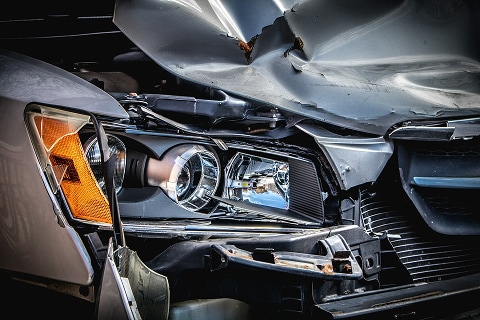
Image by Clark Van Der Beken | Licensed with Unsplash License